Uncover What Students Understand. Know What Experiences to Give Next.
Assessing Math Concepts | TK–Grade 2+
Assessing Math Concepts helps teachers uncover what students understand about foundational mathematical ideas—not just whether they get the right answer. Use what students reveal through assessment to plan meaningful experiences that builds on their thinking.
Explore Assessing Math Concepts

Uncover Student Thinking
This series of assessments goes beyond “getting right answers” to reveal students’ true understanding of the mathematics.
Determine the Level of Thinking
The assessments follow the Critical Learning Phases to determine the level of thinking each student has reached to help ensure they are working at the most appropriate level for maximum growth and understanding.
Support Mathematical Growth
These formative assessments give teachers the information they need to plan for instruction for each student in their classroom.
Assessment that informs instruction
The Assessing Math Concepts resources give educators a practical tool to observe, assess and understand student’s mathematical thinking. With a continuum of assessments and guidance for linking results to instruction, you’ll have what you need to plan responsive, research-based math instruction.
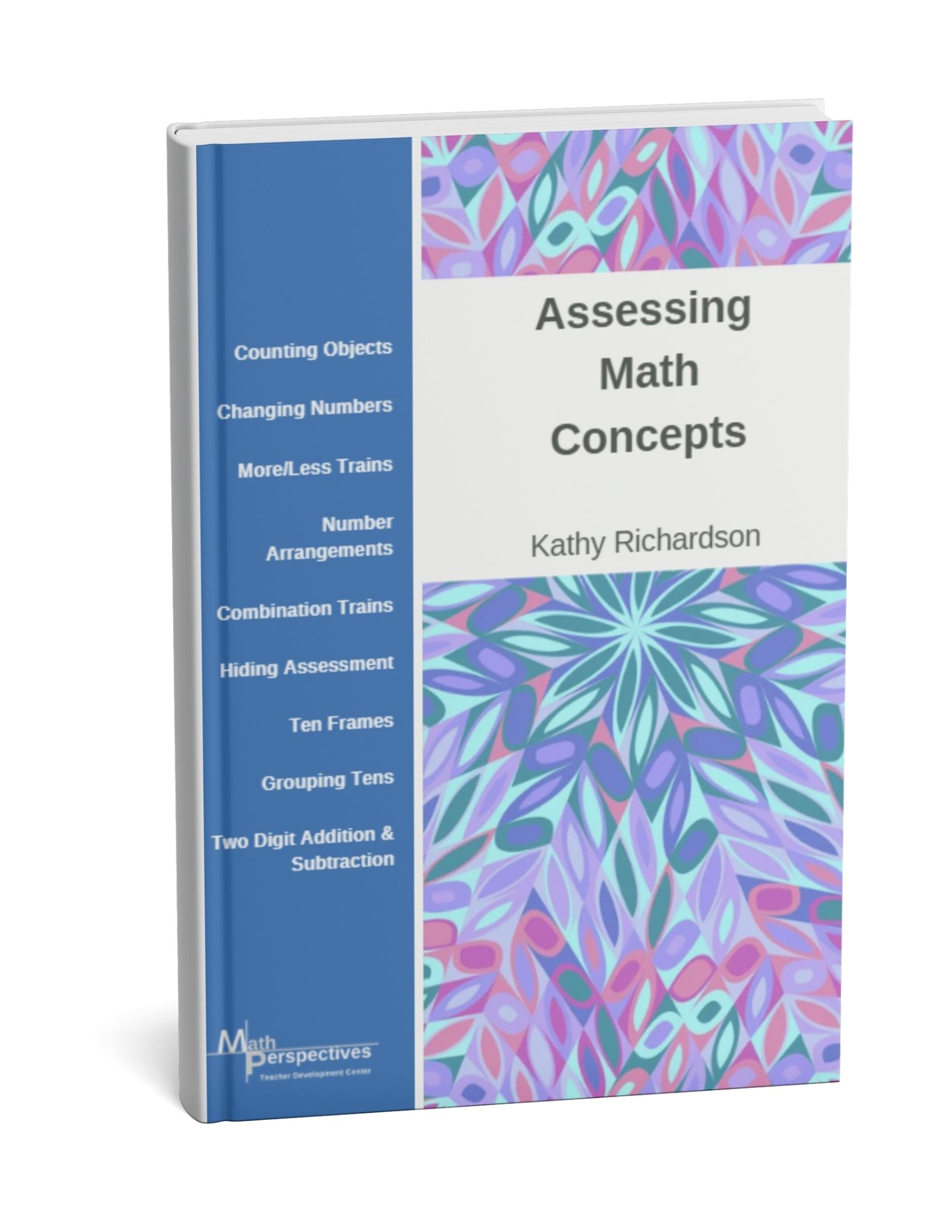
Assessing Math Concepts
BOOK
A continuum of assessments for core concepts, with linking results to instruction.

AMC Grade Level Course
PROFESSIONAL LEARNING
Learn how to use the assessments to plan instruction and support all learners.

AMC Anywhere
ONLINE RESOURCE
Digital tracking assessment features, with results that support instructional planning and progress monitoring.
Assessing Math Concepts – Groundbreaking Assessments for K-3 Mathematics as defined in the CCSS-Math
The Common Core Standards-Math (CCSS-M) define what students should understand and be able to do in their study of mathematics. The Core Standards document does not only identify particular math concepts to be achieved but emphasizes the importance of the higher order thinking skills necessary for mathematical proficiency.
The improvements in math education recommended by the Common Core Standards in mathematics are strongly aligned with Assessing Math Concepts.
“These Standards are not intended to be new names for old ways of doing business. They are a call to take the next step. It is time for states to work together to build on lessons learned from two decades of standards based reforms. It is time to recognize that standards are not just promises to our children, but promises we intend to keep.” CCSS-M Introduction, p. 5
Kathy Richardson’s ground-breaking work represents the next steps defined in the CCSS-Math. Assessing Math Concepts (AMC) presents teachers with a continuum of assessments that follows the stages of children’s development of math concepts (Critical Learning Phases) so teachers can identify where children are in their development and provide appropriate instruction. These assessments are the next step in math assessments. These are the assessments for the future of mathematics education as defined in the CCSS-M.
“What students can learn at any particular grade level depends upon what they have learned before. Ideally then, each standard in this document might have been phrased in the form, “Students who already know A should next come to learn B.” But at present this approach is unrealistic—not least because existing education research cannot specify all such learning pathways. Of necessity therefore, grade placements for specific topics have been made on the basis of state and international comparisons and the collective experience and collective professional judgment of educators, researchers and mathematicians. One promise of common state standards is that over time they will allow research on learning progressions to inform and improve the design of standards to a much greater extent than is possible today. Learning opportunities will continue to vary across schools and school systems, and educators should make every effort to meet the needs of individual students based on their current understanding.” CCSS-M
The Critical Learning Phases identified by Kathy Richardson and assessed in Assessing Math Concepts are the “learning pathways” described in the CCSS document above. Richardson’s research into how children develop an understanding of the core concepts of mathematics reveals certain essential ideas that are milestones in this process. For each major mathematical idea, there are certain understandings that must be in place to ensure the student is truly learning and not simply imitating procedures. When children receive instruction before they have these foundational ideas in place they may memorize the steps without understanding and will not grasp the underlying logic of the mathematics they need for future growth. AMC provides the tool for teachers to identify the stages of development, or Critical Learning Phase, a student has achieved. These insights provide teachers with the most comprehensive information to provide targeted instruction to meet each student at their specific level. AMC is the “new thinking” needed today in mathematics education as stated in the CCSS-Math.
“The Standards for Mathematical Content are a balanced combination of procedure and understanding. Expectations that begin with the word “understand” are often especially good opportunities to connect the practices to the content. Students who lack understanding of a topic may rely on procedures too heavily.” CCSS-M
AMC assessment data uncover students’ strategies, misconceptions, and understanding of the core concepts of number. The assessments are designed to make teachers’ classroom instruction more effective. AMC reveal what students understand and what they still need to learn.
AMC Reports
The web-based version of AMC provide teachers with reports that can help them inform their instruction, monitor student progress, and identify students for intervention.